
Biomonitoring
BSOH Seminar - Journée d'étude - Studiedag
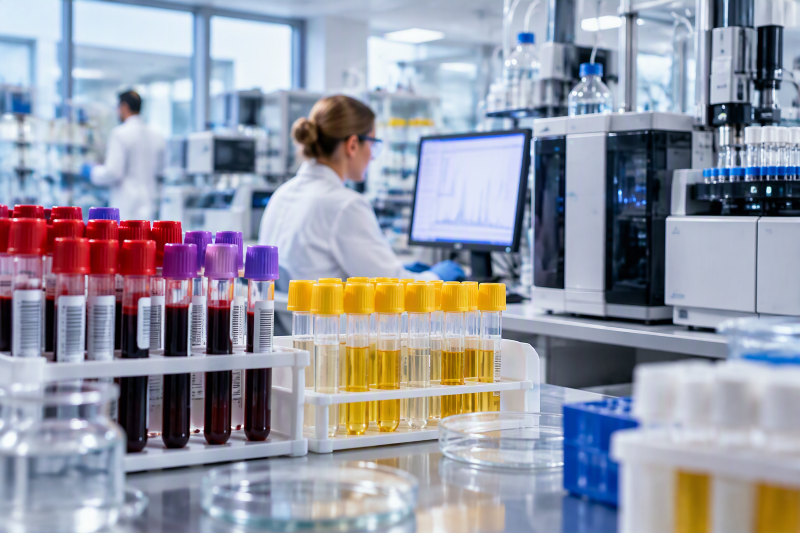
During this seminar, several experts from Belgium and abroad will take a closer look at this topic. In the morning, we will explain the basic principles and tricks on how to complete a biomonitoring strategy in the workplace, present a proposal for new OEL values for anesthetic gases, and share a very practical case study on managing exposure to lead.
After lunch, we will continue with a study on firefighters after hot zone interventions. We will stay in the heat for a while and continue with biomonitoring campaigns in a large steel producing factory, before cooling down again with a study examining ethanol exposure among nurses who disinfect their hands very frequently. We will conclude the seminar with a case study from a major chemical corporation where biomonitoring was performed following technical interventions.
Seminar Director
Dr. Johan Sterckx (BSOH Vice-chair)
Moderators
Fabian Lejeune (BSOH Chair)
Dr. Johan Sterckx (BSOH Vice-chair)
Point of contact for all questions and requests: events@bsoh.be
Program
| Time | No | Title | Language | Speaker | Organisation | ||
|---|---|---|---|---|---|---|---|
| slides | spoken | ||||||
| 08:30 | Welcome | ||||||
| 09:00 | 0 | Introduction | EN | EN | Dr. Johan Sterckx | BSOH, Board Director | |
| UZ Brussel, Arbeidsarts/preventieadviseur industriële hygiëne | |||||||
| 09:10 | 1 |
Biométrologie des substances chimiques sur le lieu du travail |
EN | FR | Dr. Johan Sterckx | UZ Brussel, Arbeidsarts/preventieadviseur industriële hygiëne | |
|
La surveillance biologique dans le cadre professionnel est importante car elle reflète
l'exposition globale des salariés aux agents chimiques via toutes les voies de pénétration.
|
|||||||
| 09:55 | 2 |
Health-based recommended occupational exposure limits for nitrous oxide, isoflurane and sevoflurane using experimental animal data based on a systematic review and dose-response analysis |
EN | EN | Prof. Paul Scheepers, Dr, Ir, MSc, PhD | Radboud University, Associate professor | |
|
Epidemiological studies have raised concerns about health risks from occupational exposure to inhalation anesthetics.
This study aimed to systematically search, select and appraise the evidence from animal studies to derive occupational
exposure levels (OELs) for nitrous oxide, isoflurane and sevoflurane. Comprehensive searches in PubMed, EMBASE, and Web
of Science were performed to retrieve all relevant studies addressing neurological, reproductive and developmental
outcomes related to inhalation of the inhalation anesthetics of interest in animals. Four studies were included for
nitrous oxide, 24 studies for isoflurane and 7 studies for sevoflurane based on availability of quantitative
exposure-response data. Studies were ranked by adverse outcomes using derived benchmark dose lower bounds (BDMLs). For
nitrous oxide the critical effect was a reduced number of live fetuses/mother male. For isoflurane and sevoflurane
fertility was considered as the most critical effect. Assessment factors were applied to cover uncertainties regarding
interspecies and intraspecies differences. Using the BMDL as point of departure we derived 8-h time-weighted average
(TWA) OELs of 20 mg/m3 for nitrous oxide, 0.9 mg/m3 for isoflurane and 0.8 mg/m3 for sevoflurane. For peak exposures,
15-min TWA OELs of 30 mg/m3 for isoflurane and 25 mg/m3 for sevoflurane were derived. This value could not be derived
for nitrous oxide. These new OELs are expected to protect workers from health effects caused by these anesthetic gases.
|
|||||||
| 10:40 | Short networking break | ||||||
| 10:55 | 3 |
Casestudy Biomonitoring voor lood |
NL | NL | Christel Swinnen, MSc | CLB, Afdelingshoofd Arbeidshygiëne en Toxicologie | |
|
In een bedrijf met een belangrijke blootstelling aan
lood worden jaarlijks zowel luchtstaalnames als
biomonitoring uitgevoerd, en dit reeds vele jaren. De
resultaten zijn niet goed. Door een gerichte aanpak
betreffende het informeren van de medewerkers
over deze resultaten wordt getracht deze resultaten
te verbeteren, met succes.
|
|||||||
| 11:40 | 4 |
Biomonitoring of firefighters during simulated and real fire interventions a step-by-step approach |
EN | EN | Rani Claus, PhD / Apotheker | KU Leuven, unit Environment & Health, Post doctoral researcher | |
| Firefighters operate in an exceptionally complex and hazardous occupational environment, characterised by exposure to smoke, toxic chemicals, and extreme physical and thermal stress. Among the numerous chemicals encountered during fire interventions, polycyclic aromatic hydrocarbons (PAHs) are frequently reported at elevated levels. PAHs are released during the incomplete combustion of carbon- containing materials such as wood, coal, oil, or gas. Their adverse health effects are largely driven by metabolic activation in the human body, producing reactive metabolites that can bind to DNA, induce mutations, and contribute to cancer development and adverse reproductive outcomes. During fire interventions, volatile organic compounds (VOCs) may also be released, for example, through the combustion of plastics, textiles, and furniture. Several VOCs, such as benzene, are categorised as carcinogenic based on substantial evidence. VOC exposure can induce oxidative stress, leading to the dysregulation of the inflammatory pathway and potentially causing DNA mutations. Urine biomonitoring, particularly the measurement of hydroxylated PAHs (OH-PAHs) and benzene metabolites, helps assess internal doses and potential health risks. However, characterising real- life occupational exposure through biomonitoring remains challenging and complex. This presentation will discuss the process of developing a standardized operational biomonitoring protocol, including the challenges encountered and lessons learned. | |||||||
| 12:25 | Lunch break | ||||||
| 13:25 | 5 |
Biologische monitoring in een staalbedrijf |
EN | NL | Dr. Tom Van Weyenbergh | ArcelorMittal, Occupational Physician | |
|
De productie van staal vanaf grondstoffen verloopt in
verschillende stappen. Bij meerdere stappen komen
stoffen vrij waar biologische monitoring op kan
gebeuren. De voornaamste worden toegelicht met
concrete voorbeelden uit de rapportage van deze gegevens.
|
|||||||
| 14:10 | 6 |
Contribution of dermal ethanol absorption during laboratory-controlled high-frequency use of alcohol-based hand rubs followed by glove use |
EN | EN | Prof. Paul Scheepers, Dr, Ir, MSc, PhD | Radboud University, Associate professor | |
|
The safety of using ethanol-based products for hygienic hand disinfection
in healthcare workers is controlled by restricting air levels. This raises
the question of whether these workers are sufficiently protected. The study
aim was to determine the contribution of the dermal route to the total uptake
of ethanol. A laboratory-controlled study of 25 sequential
alcohol-based-hand-rubs (ABHRs) with subsequent intermediate glove use was
conducted in seven healthcare workers. Two exposure conditions were compared:
hands and forearms placed inside a laboratory fume hood preventing inhalation
(skin-only condition) and the same procedure but outside the fume hood to allow
inhalation (reference condition). The hand hygiene product contained 84% ethanol
and 1% ethanol-d6 added to verify exogenous origin. Inhalation exposure was
measured by personal air sampling. Blood was collected at baseline, during an
exposure and a post-exposure wash-out period and analysed for ethanol and ethanol-d6
by HS-GC-MS. The contribution of dermal uptake was assessed by comparing the
area-under-curve (AUC) of blood ethanol concentrations in the skin-only-condition
with that in the reference-condition within each study participant. Inhalation
exposure in the breathing zone was (mean ± sd): 5.3±3.6 mg/m3 in the skin-only
condition and 120±7 mg/m3 in the reference condition. The contribution from dermal
absorption was observed to be 43±28% (N = 7) of the total uptake (inhalation and
dermal). For ethanol-d6 this contribution was 40±16% (N = 3). In conclusion,
high-frequency ABHRs lead to significant dermal absorption of ethanol.
|
|||||||
| 14:55 | Short networking break | ||||||
| 15:10 | 7 |
Human biomonitoring during maintenance work in a chemical plant |
EN | EN | Dr. Luk De Meulenaere | BASF Antwerpen NV, Occupational Health Physician | |
|
Maintenance work in a chemical production installation entails an increased risk of exposure to hazardous chemical
agents. Workplace air monitoring often reveals concentrations of chemical substances that are (far) above occupational
exposure limits. Workers are therefore required to use specific personal protective equipment (PPE). Human biomonitoring
can be a valuable tool for assessing exposure to chemical substances and for monitoring the effectiveness of both
collective protective measures and personal protective equipment.
|
|||||||
| 15:55 | Closing remarks | EN | EN FR NL |
Fabian Lejeune, MSc | BSOH, Chairman | ||
| 16:05 | End of program | ||||||
Questions and suggestions
Leave your thoughts in the comments section below.
Or send an e-mail to the
events team.
Location: Den Agora in UZ Brussel, Laarbeeklaan 101, 1090 Jette
Watch out! Den Agora is incorrectly marked on Google Maps! Please go to ‘Ingang consultaties volwassenen’ instead and follow the directions below
-
Wegbeschrijving NL
-
Itinéraire FR
| free | for members of the Belgian Society for Occupational Hygiene (BSOH). |
| 75.- EUR |
for non-members. BSOH membership until 31/12/2026 is included. |
Niet later dan 02/11/2026 00:00
If you have a website account,
login to register for this seminar.
If you don't have a website account,
create a free website account to register for this seminar.
50 places left.
Registration Not later than 02/11/2026 00:00
6 days left for registration.